Psychopathy and brain anatomy: what scientists found in scans of prisoners

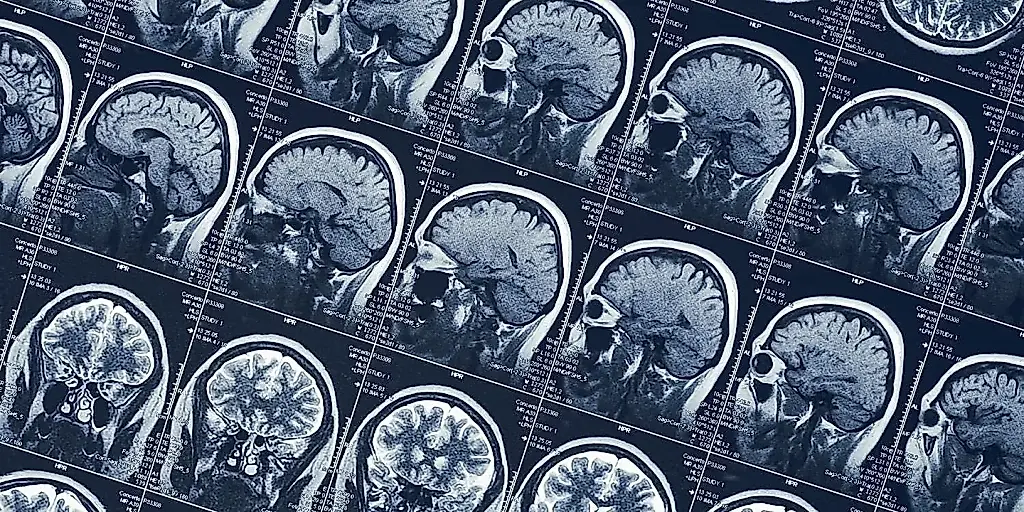
A recent study has strengthened the link between psychopathic traits and brain structure — and, as usual, the answer turned out to be anything but straightforward. Scientists scanned the brains of more than 800 male prisoners in the United States and found that those who scored highest on a psychopathy scale not only displayed distinctive behaviour — no empathy, manipulation and impulsiveness — but also had genuinely altered biological characteristics. In particular, their brain surface area (the outer layer of the brain, or cerebral cortex) was larger, while the overall organisation of their tissue was more "compressed". To put it simply, the brain's architecture was less differentiated, as if everything had been pressed towards the average and the individual regions had lost their distinctiveness.
A reminder: psychopathy is not just a bad temper. In clinical psychology, the term refers to a combination of antisocial behaviour, a strong ability to manipulate, impulsiveness and an almost complete lack of empathy. Empathy itself is a complex concept: it includes both the ability to understand another person (cognitive empathy) and to share their feelings (empathic concern).
Led by Marcin Radecki (Cambridge, IMT School), the researchers compared prisoners' brain structure with their personality traits. They used the Interpersonal Reactivity Index questionnaire to measure empathy and the Psychopathy Checklist-Revised to assess psychopathy. This recognised diagnostic tool divides traits into "interpersonal-affective" (charm, egocentrism and lack of remorse) and "antisocial-lifestyle" (impulsiveness, irresponsibility and a clear criminal history) factors.
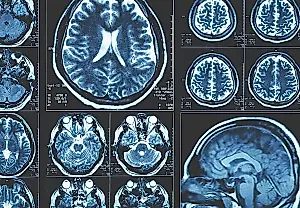
The brains were analysed using MRI scans taken on prison grounds, allowing the researchers to include a large number of prisoners — these studies are usually limited to small samples. After processing the scans, the team measured cortical thickness and surface area in detail, compared these measures with personality scores and looked for links in specific brain regions. The main finding was that an expanded surface area, especially in regions involved in social and emotional processes — the temporal and paralimbic areas — was characteristic of psychopathic traits, but was not linked to the empathy scores from the questionnaire.
The higher the level of psychopathy, the more pronounced the "compression" of structural gradients: the distance between the brain's "simple sensory" and "complex associative" regions shrank. Similar patterns have been observed in people with schizophrenia and depression.
Limitations? Of course — there always are. Empathy was assessed subjectively, using self-reports rather than objective emotion-recognition tests. All the participants were male prisoners; nobody knows what the findings would be for women or people who are not incarcerated. The researchers therefore warn that it is too early to draw conclusions about humanity as a whole. The mechanisms behind the cortex's expansion need to be studied, and the findings must be tested again in other groups using other assessments. This may eventually make it possible to develop strategies for building empathy and preventing antisocial behaviour.
PEREC.RU
Well, what else would you expect? They gathered 800 men from US prisons, scanned their brains, and compared who was more psychopathic and who was less. The result: the "champions" of psychopathy have brains that look as if someone has spent ages ironing their cortex — the surface is larger and the structure "flattened". This all concerns regions where emotions and social interaction take shape, but it doesn't show up at all in standard empathy questionnaires. Either the studies are lying, or the participants are.
More interestingly, the typical division of the brain into "simple" and "complex" regions fades in psychopaths, as it does in patients with schizophrenia. The picture that emerges is of a brain stripped of clearly defined regions responsible for feelings and actions. Respected psychologists and neuroscientists — Radecki, Kiehl and co. — are honest about the caveat: the study only involved men in prison; women and people "at liberty" have yet to be studied. For now, the main takeaway is that genuine neurological screening for "toxic" personalities may soon appear, and socialisation may stop being a science of collecting questionnaires.